ㅤWP2 – AQUILA ASSESMENTㅤ
ㅤㅤㅤㅤㅤㅤㅤㅤㅤㅤㅤㅤㅤㅤㅤㅤㅤㅤㅤㅤㅤㅤㅤㅤㅤㅤㅤㅤㅤㅤㅤ
ㅤㅤㅤㅤㅤㅤㅤㅤㅤㅤㅤㅤㅤㅤㅤㅤㅤㅤㅤㅤㅤㅤㅤ
Objective
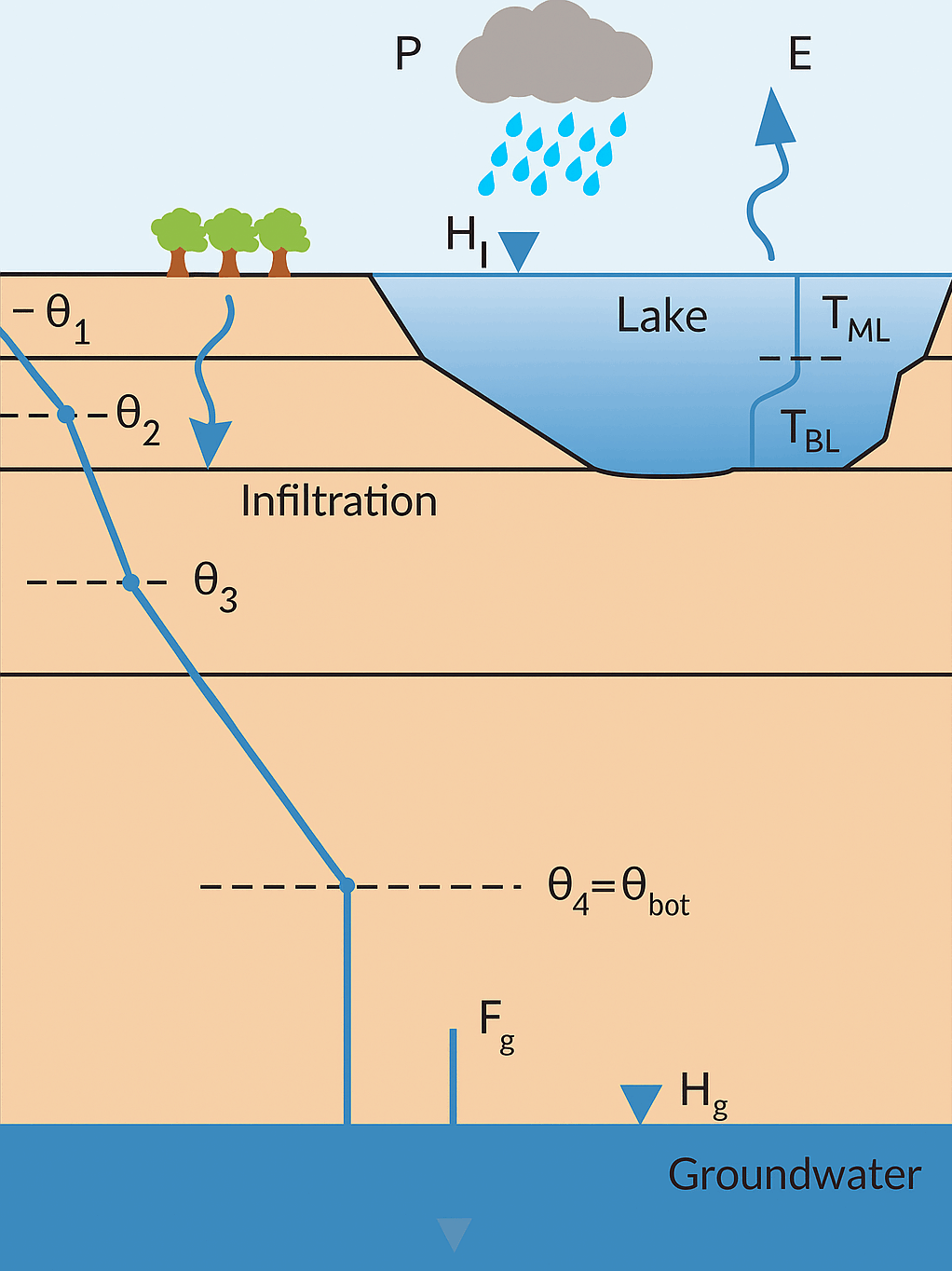
Work Package 2 focuses on the development and evaluation of the AQUILA model—a user-oriented modeling tool designed to simulate groundwater (Hg) and lake (Hl) levels. The model integrates reanalysis datasets and ground measurements, supporting water availability predictions for more effective resource management in the face of climate change. ㅤㅤㅤㅤㅤㅤㅤㅤㅤㅤㅤㅤㅤㅤㅤㅤㅤㅤㅤㅤㅤㅤㅤㅤㅤㅤㅤㅤㅤㅤㅤㅤㅤㅤㅤㅤㅤㅤㅤㅤㅤㅤㅤㅤㅤㅤㅤㅤㅤㅤㅤㅤㅤㅤㅤㅤㅤㅤㅤㅤㅤㅤㅤㅤㅤㅤㅤㅤㅤㅤㅤㅤ
Methodology
AQUILA is built on a mass balance framework adapted for shallow unconfined aquifers and natural lakes:
– For aquifers: The main recharge mechanism is the water flux (Fg) through the vadose zone. This is derived from soil moisture (θ) and precipitation data.
– For lakes: AQUILA integrates precipitation (P), evaporation (E), and water inflow data, along with mix-layer and bottom-layer temperatures (TML, TBL) sourced from FLake and other reanalysis tools.
– The model combines atmospheric reanalysis (ERA5L, ERA5) and ground-based measurements from WP1’s WSN.
– AQUILA simulations are performed using a monthly time step (Φ = 1 month), appropriate for capturing long-term aquifer and lake dynamics.
ㅤㅤㅤㅤㅤㅤㅤㅤㅤㅤㅤㅤㅤㅤㅤㅤㅤㅤㅤㅤㅤㅤㅤㅤ
Field Validation
Pilot System 3 (PS3) in Padua will be used for model validation by:
– Correlating simulated Fg values with measured groundwater levels (Hg)
– Comparing lake level predictions (Hl) with inflow and meteorological data
– Adjusting model parameters to reflect observed field behaviorㅤㅤㅤ
Workplan Overview:
Lead Beneficiary: UNIPG_DICA
Specific Objectives (SO): 3, 11
Tasks
– T2.1: Preliminary analysis of case study PS3 (UNIPG_DICA)
– T2.2: Acquisition of data from reanalysis (UNIPG_CCC)
– T2.3: Development of AQUILA (UNIPG_CCC)
– T2.4: Calibration of AQUILA parameters (UNIPG_CCC)
– T2.5: AQUILA performance evaluation (UNIPG_DICA)ㅤㅤㅤㅤㅤㅤㅤㅤㅤㅤㅤㅤㅤㅤㅤㅤㅤㅤㅤㅤㅤㅤㅤㅤㅤㅤㅤㅤㅤㅤㅤㅤㅤㅤㅤㅤㅤㅤㅤㅤㅤㅤㅤㅤㅤㅤㅤㅤㅤㅤㅤㅤ
Milestones
– M6: The AQUILA parameters will be calibrated
– M7: The AQUILA performance will be evaluatedㅤㅤㅤㅤㅤㅤㅤㅤㅤㅤㅤㅤㅤㅤㅤㅤㅤㅤㅤ
Deliverables
– D2.1: Report on AQUILA development, validation and performanceㅤㅤㅤㅤㅤㅤㅤㅤㅤㅤㅤㅤㅤㅤㅤㅤㅤㅤㅤㅤㅤㅤㅤㅤㅤㅤㅤㅤㅤㅤㅤㅤㅤㅤㅤㅤㅤㅤㅤㅤㅤㅤㅤㅤㅤㅤㅤㅤㅤㅤㅤㅤㅤㅤㅤㅤㅤㅤㅤㅤㅤㅤㅤㅤㅤㅤㅤㅤㅤㅤㅤㅤㅤㅤㅤㅤㅤㅤㅤㅤㅤㅤ
Expected Outputs
– A validated AQUILA model calibrated to different hydrological contexts
– Simulation results that inform seasonal forecasting activities in WP3
– Scientific insights into aquifer recharge and lake level dynamics
– A transferable methodology for water availability prediction in other regionsㅤㅤㅤㅤㅤㅤㅤㅤㅤㅤㅤㅤㅤㅤㅤㅤㅤㅤㅤㅤㅤㅤㅤㅤㅤㅤㅤㅤㅤㅤㅤㅤㅤㅤㅤㅤㅤㅤㅤㅤㅤㅤㅤㅤㅤㅤㅤㅤㅤㅤㅤㅤㅤㅤ
Connections to Other WPs
– Provides core simulation capabilities for WP3’s seasonal forecasts
– Supports digital twin development in WP4 with accurate hydrological baselines
– Underpins the decision-making tools and strategies developed in WP5ㅤㅤㅤㅤㅤㅤㅤㅤㅤㅤㅤㅤㅤㅤㅤㅤㅤㅤㅤㅤㅤㅤㅤㅤㅤㅤㅤㅤㅤㅤㅤㅤㅤㅤㅤㅤㅤㅤㅤㅤㅤㅤㅤㅤㅤㅤㅤㅤㅤ
WP2 establishes a scientifically robust modeling foundation for the MORE4WATER project, enabling forward-looking resource planning and resilience to climate variability.
ㅤ