PILOT SYSTEM 3 (PS3) – VILLAVERLA AQUIFER AND DISTRICT METERED AREA IN PADUA, MANAGED BY ACEGASAPSAMGA (AAA), ITALY
The Pilot System PS3, coordinated by AcegasApsAmga SpA (AAA), plays a central role in the MORE4WATER project, supporting all eight Work Packages as a comprehensive proof of concept. This pilot system combines groundwater monitoring with urban water network analysis, offering a full-scale platform to test and validate the project’s methods, models, and strategies.
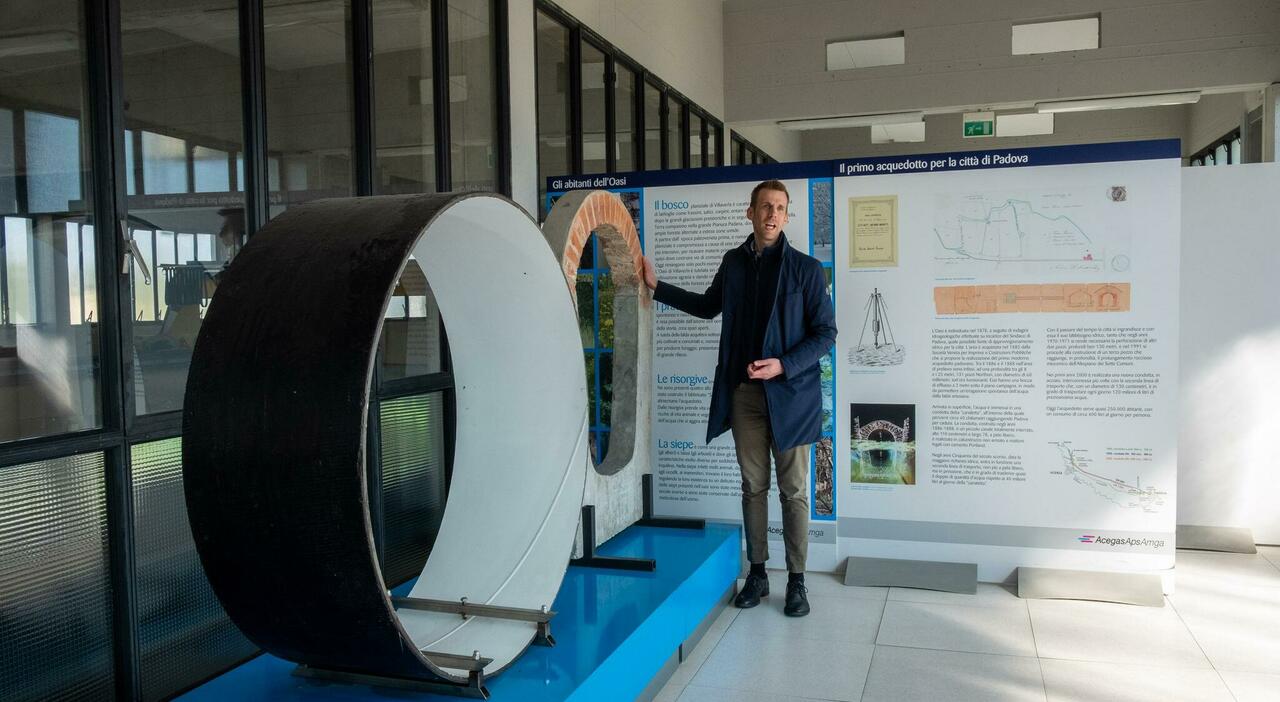
Villaverla Aquifer – Strategic Groundwater Resource
Located in the northeastern plains of Italy, near Vicenza, the Villaverla aquifer is a shallow unconfined groundwater body that supplies the city of Padua. Water is extracted in the municipality of Dueville, treated, and conveyed to Padua via three transmission mains.
This aquifer lies along a hydrogeologically sensitive resurgence line, where groundwater naturally rises through layers of coarse to fine sediment. The subsoil structure consists of undifferentiated alluvial deposits overlying an impermeable rocky base.
District Metered Area – Urban Water Network in Padua
In addition to the aquifer, a District Metered Area (DMA) located in the industrial zone of Padua has been selected as part of PS3. This enables the project to monitor and model the dynamic behavior of both a transmission main and a controlled section of the urban water distribution network.

Integrated Monitoring and Modeling
Within PS3, the following integrated activities will be carried out:
Deployment of the Wireless Sensor Network (WSN) to monitor:
Groundwater levels in the Villaverla aquifer
Flow and pressure in one of the transmission mains
Hydraulic behavior within the selected DMA
Application of the AQUILA model to simulate aquifer dynamics and recharge
Development of digital models for both groundwater and distribution networks
Implementation of technical, legal, and economic strategies for system optimization, particularly in response to climate change adaptation needs
This integrated pilot system provides an essential testing ground for validating technologies and decision-support tools developed across all WPs, helping to ensure their scalability, regulatory coherence, and real-world applicability.
Project Update – Pilot System 3 Activated at Villaverla Aquifer
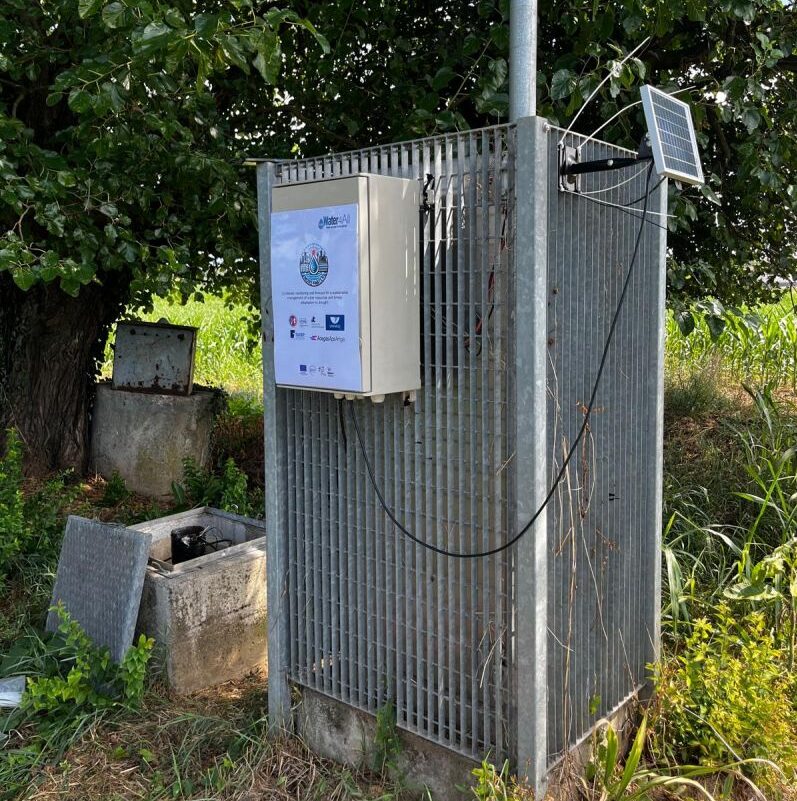
On 11 July 2025, a datalogger developed within WP1 – Monitoring with Smart and Distributed Sensors – was successfully installed at the Villaverla Aquifer to monitor groundwater level. With this installation, Pilot System 3 at Villaverla (managed by AcegasApsAmga) is now active!
This achievement follows earlier milestones:
Installation and activation of the WSN at Testbed 1 (Lisbon, Portugal) led by Instituto de Telecomunicações
Deployment in June at Testbed 2 (the Water Engineering Laboratory, DICA UniPG), led by Università degli Studi di Perugia
The Wireless Sensor Network (WSN) is designed to monitor groundwater and lake levels, as well as urban water supply and irrigation systems in real-time, enable smart, distributed data collection, and support efficient and sustainable water resource management.
This marks an important step toward Integrating Ground Sensors with ERA5 and advancing the AQUILA approach: user-oriented numerical models that combine atmospheric reanalysis datasets with a parsimonious number of ground measurements.
Project Update – Pilot System 3 additional dataloggers installed in the industrial district of Padua
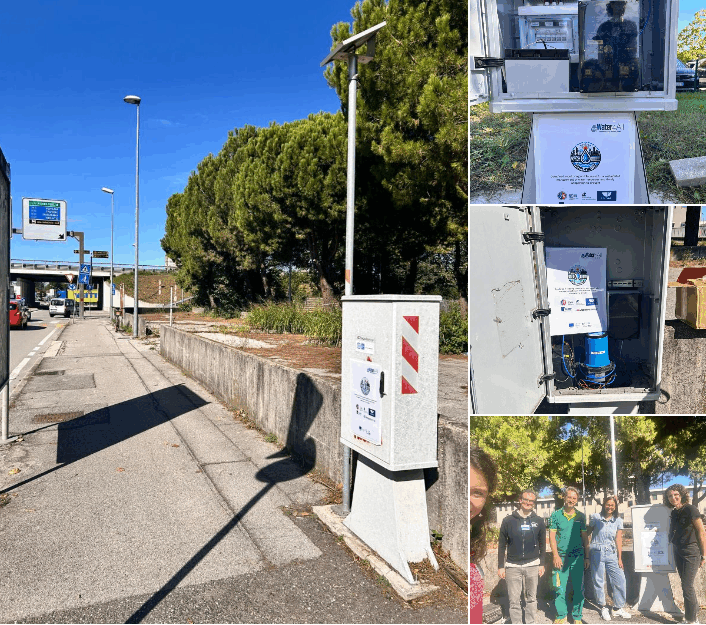
On 25 September 2025, two additional dataloggers were successfully installed in the industrial district of Padua, managed by AcegasApsAmga, to monitor low- and high-frequency pressure signals. Operators can now easily switch between low- and high-frequency acquisition modes depending on the diagnostic needs. Both GSM communication (for reliable data transfer to the server) and GPS synchronization (for precise pressure data alignment) were activated.
This upgrade expands the scope of PS3 beyond groundwater level tracking to include critical pressure dynamics in the network.
This installation strengthens MORE4WATER’s capacity to integrate smart monitoring with advanced modeling — an essential step for improving system diagnostics, anticipating issues, and promoting efficient, sustainable water management.