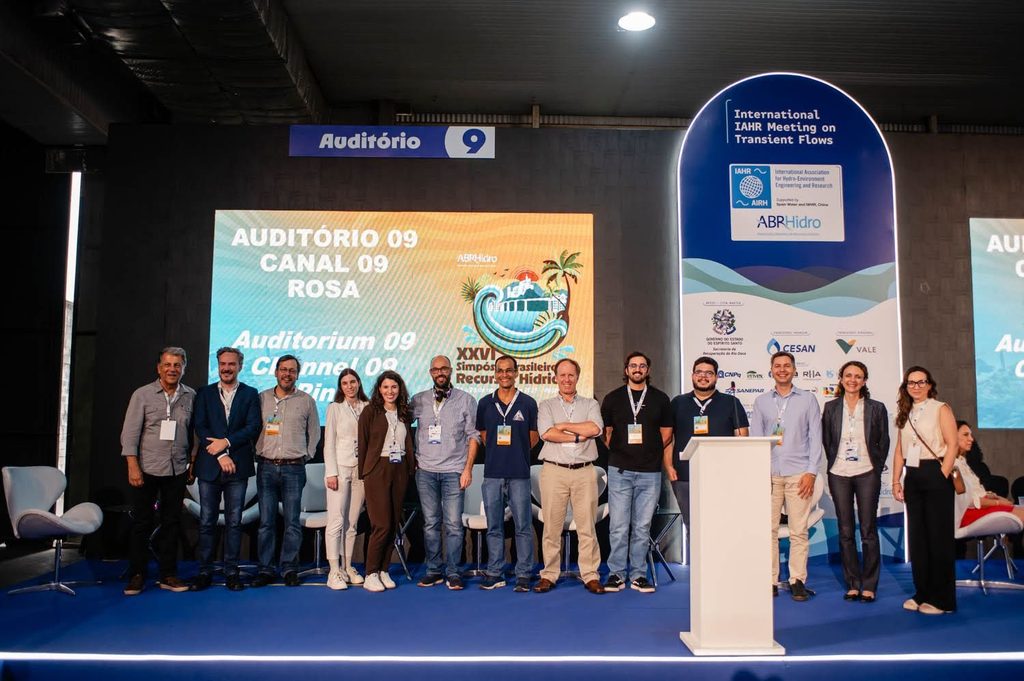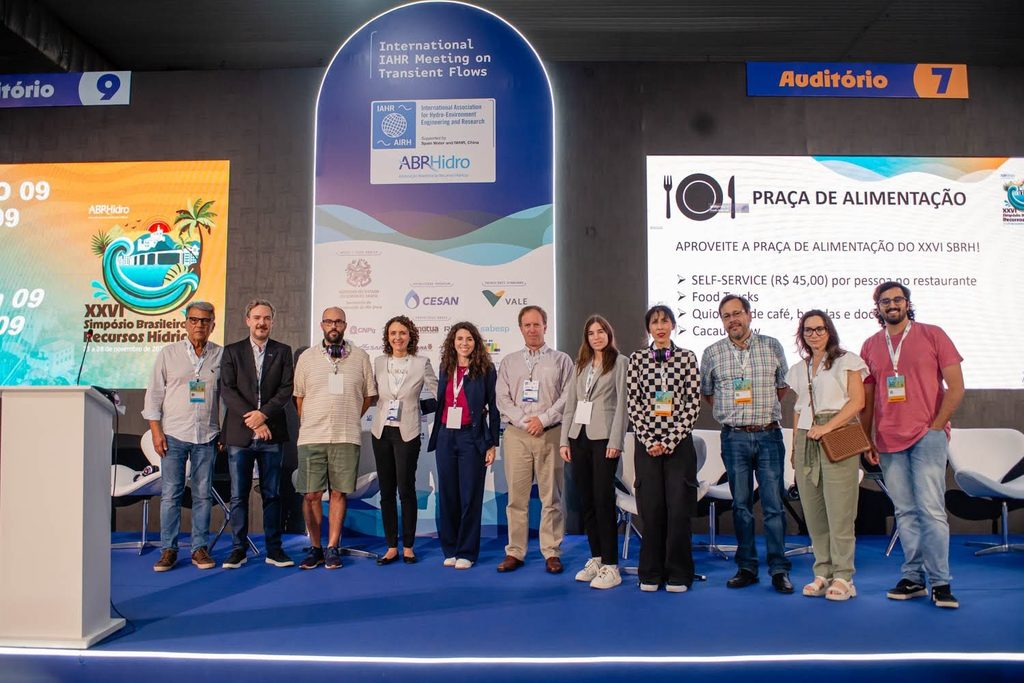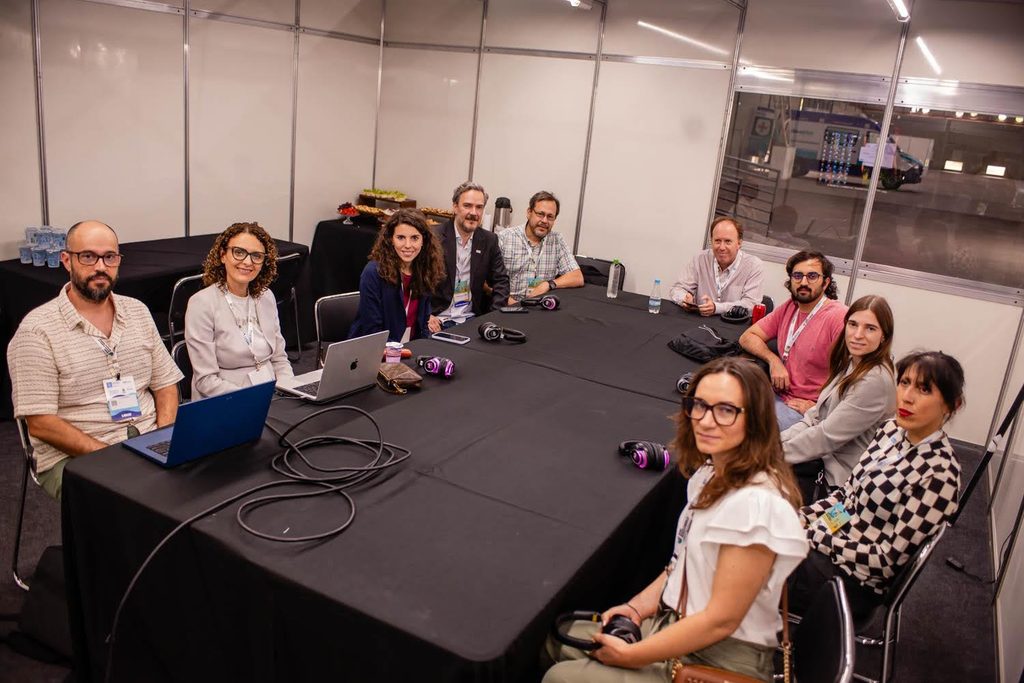
Prof. Eng. Silvia Meniconi, Prof. Eng. Caterina Capponi and Eng. Debora Falocci, PhD student, participated in the International in the International IAHR Meeting on Transient Flows, held on 25–26 November 2025 in Vitória, Brazil, in conjunction with the XXVI Brazilian Symposium on Water Resources. The meeting brought together researchers and professionals working on hydraulic transients, monitoring, modelling and anomaly detection in pressurized systems.
On 26 November, Prof. Meniconi delivered the keynote lecture “High-frequency monitoring for anomaly detection in real pressurized systems”, focusing on the use of high-frequency monitoring for the diagnosis and detection of anomalies in real water systems. The contribution is closely related to the monitoring and diagnostic activities developed within the MORE4WATER project.: High-frequency monitoring for anomaly detection in real pressurized systems.
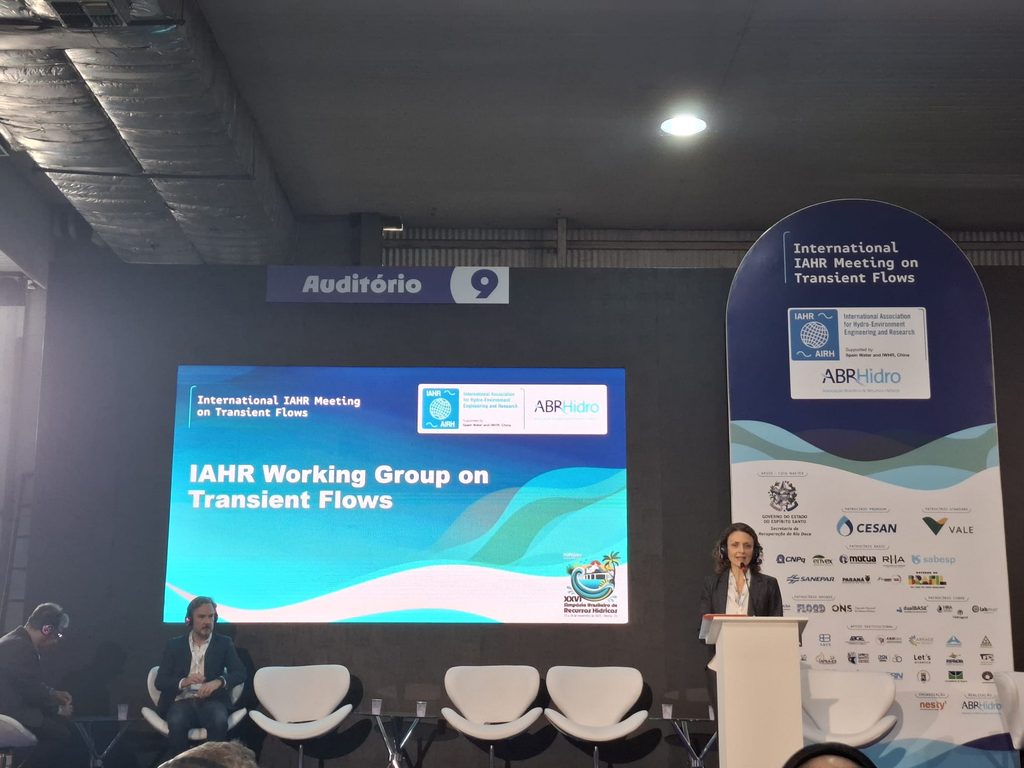
On 25 November, Prof. Caterina Capponi presented the contribution entitled “Preliminary findings on PRV anomalies in a real pressure metered area”, focusing on the analysis of anomalies associated with pressure reducing valves (PRVs) in a real pressurized system. The study presented preliminary results from field monitoring activities, with particular attention to the identification and characterization of anomalous valve behaviour. On the same day, Prof. Capponi also chaired the keynote session delivered by Prof. José Vasconcelos. The contribution is closely related to the monitoring and anomaly detection activities carried out within the MORE4WATER project.
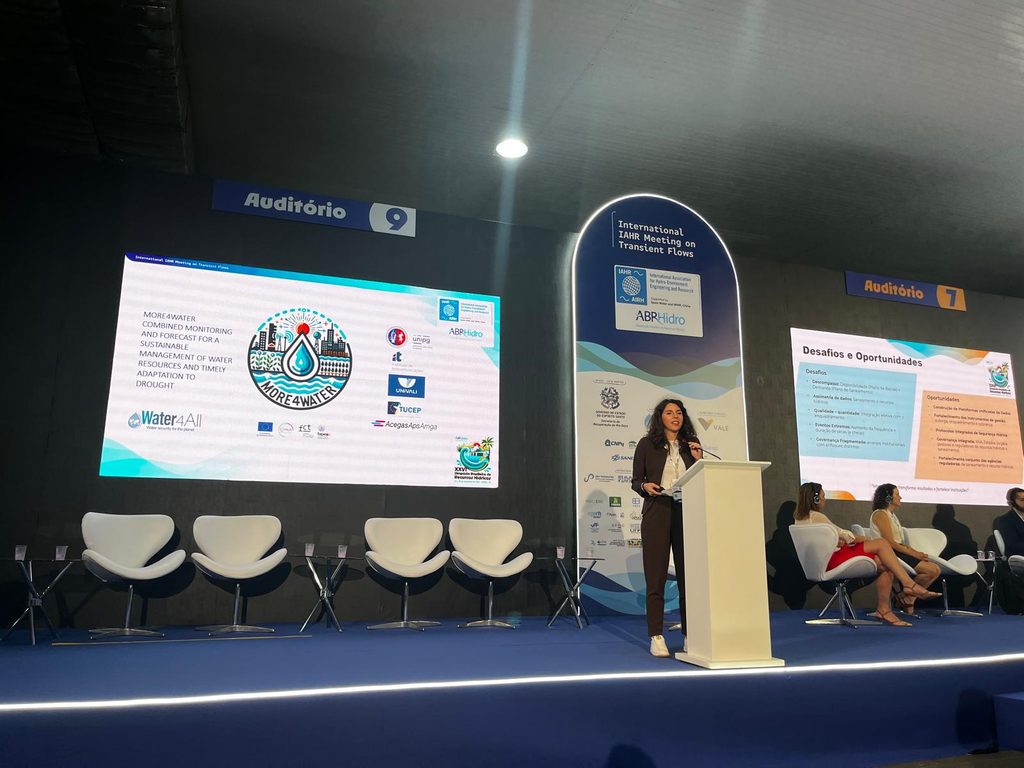
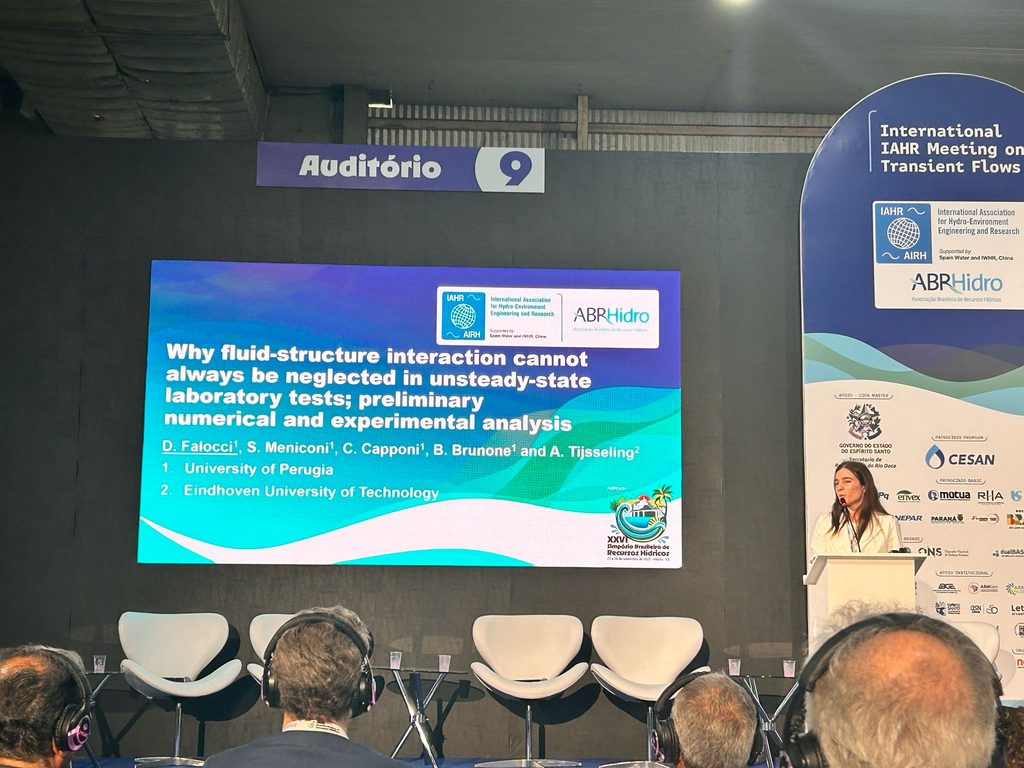
On 25 November, PhD student Debora Falocci presented the contribution entitled “Why fluid-structure interaction cannot always be neglected in unsteady-state laboratory tests; preliminary numerical and experimental analysis”. The study focused on the role of fluid–structure interaction in unsteady-flow laboratory experiments, combining numerical and experimental analyses to investigate when its effects cannot be neglected. The contribution addressed methodological aspects relevant to the accurate interpretation of transient-flow measurements and experimental data.